





10 Essential Questions Government Agencies Must Ask a New IT Partner in 2026
Government IT, IT Support, IT Partner Questions
10 Essential Questions Government Agencies Must Ask a New IT Partner in 2026
Choosing an IT Support provider in 2026 is one of the most consequential decisions a government agency can make. The right partner strengthens security, improves service delivery, and keeps you compliant. The wrong one adds risk, noise, and cost. Use these 10 focused IT Partner Questions to evaluate any potential Government IT Solutions provider with clarity and confidence.
Why these questions matter in 2026
Government Agencies in 2026 operate in a tight space: higher citizen expectations, stricter regulations, and constant cyber threats, all under budget pressure. Cloud-first mandates, zero-trust security, AI-assisted workflows, and hybrid work have moved from pilot projects to everyday reality. Your IT Support partner is no longer just a help desk. They are a strategic extension of your agency, touching sensitive data, critical infrastructure, and public-facing services.
The following 10 questions help you cut through marketing language and get to what matters: security, reliability, transparency, and alignment with public-sector responsibilities. Use them in RFPs, interviews, and renewal reviews with IT Service Providers that support government environments at the federal, state, and local level.
1. How do you secure government data in a zero-trust, cloud-first world?
In 2026, zero trust is not optional for Government IT Solutions. Ask the provider to describe their security model in plain terms. Look for concrete practices: strong identity and access management, multi-factor authentication everywhere, device posture checks, micro-segmentation, and continuous monitoring. They should explain how they secure data in transit and at rest across cloud, on-premises, and hybrid systems, and how they manage privileged access to sensitive systems such as case management, licensing, or public safety platforms.
Ask for examples from other Government Agencies they support. A mature IT Support partner can show how they apply the same security principles consistently, whether supporting a small municipal office or a large multi-agency environment.
2. What certifications, clearances, and compliance frameworks do you hold?
Compliance is now table stakes. In 2026, IT Service Providers working with the public sector are expected to align with frameworks such as NIST 800-53, NIST Cybersecurity Framework, FedRAMP, CJIS, HIPAA (for health-related data), and state-specific privacy laws. Ask for a clear list of certifications, including ISO 27001 or SOC 2, and any staff security clearances relevant to your jurisdiction or national requirements.
Do not accept vague assurances. Request copies of audit summaries, attestation letters, and a simple explanation of how these controls translate into day-to-day IT Support for your agency. A strong partner will welcome this level of scrutiny and be able to explain compliance in accessible language.
3. How do you handle incident response and disclosure timelines?
Cyber incidents are a matter of “when,” not “if,” especially for Government Agencies that manage critical services. Ask your potential IT Support partner to walk you through their incident response playbook. Who detects issues? Who triages them? Who communicates with your leadership and legal teams? How quickly will you be notified of a suspected breach, and through which channels?
In 2026, many jurisdictions have strict disclosure rules and defined timelines for reporting certain incidents. Your IT partner should know these requirements and be prepared to support you in meeting them. Clarify how they coordinate with law enforcement, auditors, and oversight bodies, and how they maintain chain-of-custody for digital evidence when needed.
🏛️ Intelesys Supports Government Agencies at Every Level
From incident response planning to zero-trust security and compliance, Intelesys has the experience and certifications to serve as a trusted IT partner for your agency. Let's talk about where you are today and what you need in a long-term partner.
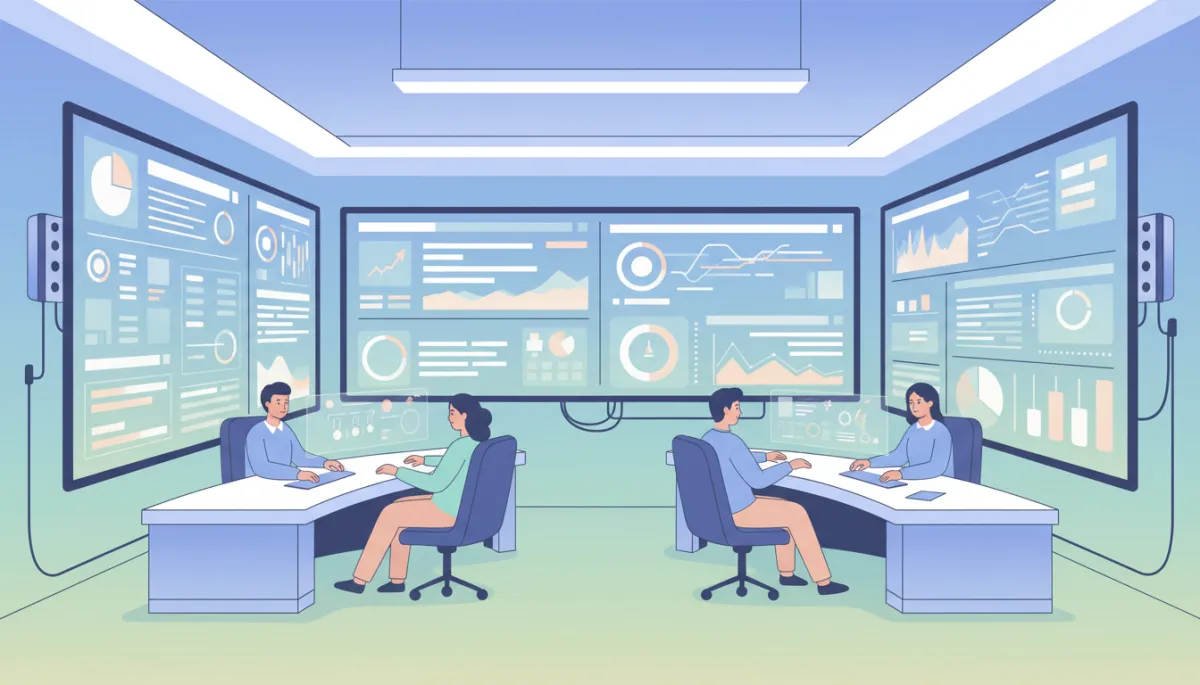
Clear incident playbooks help agencies react quickly without losing public trust.
4. How will you support hybrid work and secure collaboration?
Hybrid work is now standard in government. Staff move between office, home, and field locations, often using a mix of agency-issued and approved personal devices. Ask how the IT Support provider secures remote access, manages devices, and enables simple collaboration without compromising controls. They should be fluent in 2026 Technology tools such as cloud productivity suites, secure video conferencing, digital signatures, and workflow automation platforms.
Ask how they balance usability with security. Government IT Solutions that frustrate staff invite workarounds and shadow IT. A good partner will show how they design experiences that are straightforward for end users while still meeting strict security and retention rules.
5. How do you use automation and AI responsibly in IT Support?
By 2026, automation and AI are embedded in many IT Service Providers’ operations. Bots may triage tickets, suggest fixes, or detect anomalies in logs. Ask how your potential partner uses AI in their services, and how they manage bias, transparency, and data privacy. Government Agencies must be especially careful about where data flows and how decisions are made, even in back-office IT processes.
Look for a balanced answer. The provider should highlight efficiency gains, such as faster response times and better pattern detection, but also explain human oversight, approval flows, and clear audit trails. Responsible use of 2026 Technology is a sign of a mature, trustworthy IT Support partner.
6. What is your approach to legacy systems and modernization?
Most Government Agencies still depend on legacy applications, mainframes, or custom-built systems that are expensive to replace yet critical to operations. Ask how the IT partner will support these systems while guiding you toward modernization. A thoughtful answer will include staged roadmaps, risk assessments, and integration strategies rather than a push for immediate replacement of everything old.
The provider should show experience with hybrid architectures, APIs, data migration, and phased rollouts. They should also understand procurement cycles, funding constraints, and the reality of working within public-sector timelines. Government IT Solutions that respect both technical and policy constraints are more likely to succeed long term.
⚙️ Modernizing Legacy Systems Without Disrupting Operations
Intelesys specializes in helping government agencies bridge the gap between aging infrastructure and modern technology — on your timeline, within your budget, and without disrupting the services your community depends on.

Thoughtful modernization balances risk, cost, and continuity of public services.
7. How do you measure success, and what does transparency look like?
Service level agreements are only the starting point. Ask your prospective IT Support partner which metrics they track and how often you will see them. Common measures include response time, resolution time, system availability, security incident counts, patch compliance, and user satisfaction. In 2026, many Government Agencies also track digital equity and accessibility metrics for public-facing systems.
Request sample dashboards and reports. Transparency means you can see performance without needing to ask every time. It also means clear explanations when targets are missed and concrete plans to improve. A strong IT Service Provider will invite joint review sessions and be comfortable discussing both successes and setbacks.
8. How will you support training, change management, and adoption?
Technology only delivers value when people use it well. For Government Agencies, that includes employees, contractors, and in some cases citizens interacting with online portals. Ask how the IT partner supports training and adoption. Do they provide simple guides, short videos, and live sessions? Can they tailor materials for non-technical staff, leadership, and specialized teams like inspectors or social workers?
In 2026, effective Government IT Solutions often include ongoing “evergreen” training for new hires, refreshers on security awareness, and support for accessibility best practices. Your partner should treat change management as a core part of their service, not an afterthought tacked onto deployment.
9. How do you align with public-sector values, ethics, and procurement rules?
Government Agencies operate under public scrutiny. Decisions must stand up to audits, media attention, and community questions. Ask how the IT Support provider ensures ethical conduct, conflict-of-interest controls, and fairness in subcontracting. Explore their experience with open records requirements, data retention policies, and accessibility regulations such as WCAG for digital services.
Procurement processes can be complex, with multi-year contracts, strict bidding rules, and detailed documentation. A seasoned IT Service Provider will understand these constraints and help you stay compliant, rather than pushing you toward shortcuts that may create risk later. Their answers should reflect respect for transparency, accountability, and the public interest.
10. What will our relationship look like in three years, not just at go-live?
IT partnerships for Government Agencies are long-term. Systems you deploy in 2026 will likely still be in use in 2029 and beyond. Ask the provider to describe how they plan for the full lifecycle of your solutions. How often will you review strategy? How do they handle evolving 2026 Technology trends, new regulations, and shifting priorities from elected leaders or agency heads?
Request examples of how they have grown with other public-sector clients, including how they managed leadership changes, budget cuts, or new mandates. A strong IT Support partner will talk about continuous improvement, roadmap planning, and proactive guidance, not just initial deployment tasks.

The best IT partners think in years, not months, and evolve with you.
Turning these questions into a practical evaluation tool
To keep your process simple and consistent, turn these IT Partner Questions into a short scoring guide. For each question, define what a strong, acceptable, and weak answer looks like for your agency. Use the same criteria for every potential IT Service Provider you speak with. This keeps the focus on fit and substance, not presentation style alone.
Document responses: Capture answers in writing during demos and interviews so you can compare options objectively later.
Ask for proof: When providers mention tools, processes, or certifications, request examples, screenshots, or redacted case studies.
Include stakeholders: Invite representatives from security, operations, legal, and front-line teams to weigh in on answers.
📌 Key Takeaway: The quality of the questions you ask an IT Support partner shapes the quality of the partnership. Clear, focused questions reveal how a provider really works when the contract is signed and the pressure is on.
Final thoughts for government leaders in 2026
Technology in government is no longer just about keeping systems running. It is about delivering reliable, secure, and accessible services to the public, even as threats and expectations rise. The IT Support partner you choose in 2026 will influence how your agency responds to emergencies, communicates with residents, protects data, and adapts to new policies and laws.
Use these ten questions as a minimalist checklist when evaluating Government IT Solutions and IT Service Providers. Focus on security, compliance, incident response, hybrid work, responsible use of AI, legacy modernization, transparency, training, ethics, and long-term alignment. The right partner will answer with clarity, provide evidence, and welcome your scrutiny. They will see themselves not just as vendors, but as stewards of public trust alongside you.
When you find an IT Support partner who can do that, you are not just buying technology. You are building a stable foundation for better government services, today and into the next wave of 2026 Technology and beyond.
🤝 Is Intelesys the Right IT Partner for Your Agency?
Government agencies trust Intelesys for managed IT, cybersecurity, secure communications, and technology modernization. If you're evaluating IT partners in 2026, let's start with a straightforward conversation about your agency's needs, challenges, and goals — no pressure, no jargon.
Talk to the Intelesys Team Today →
Serving federal, state, and local government agencies across the United States.