





Implement Continuous Phishing Defense Now
Cybersecurity, Cybersecurity Best Practices, Network Security Measures
One Cybersecurity Practice Every Organization Should Implement Now: Continuous Phishing Defense
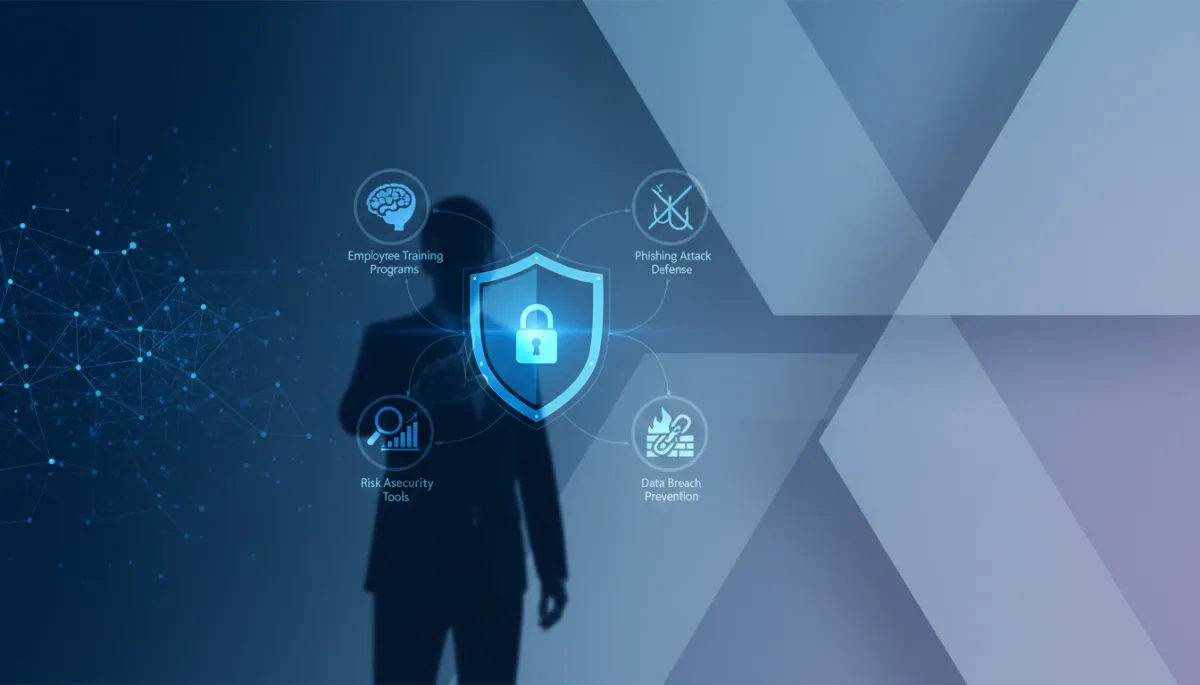
Most breaches start the same way: someone clicks. Continuous phishing defense, anchored in disciplined employee training programs and smart automation, is the single most practical cybersecurity best practice organizations can adopt today to cut real risk fast.
Why Focus on Phishing Right Now?
Attackers go where the odds favor them. Today, that means inboxes, messaging tools, and collaboration platforms. Technical network security measures matter, but most successful intrusions still begin with a persuasive message and a distracted user. As long as that remains true, phishing attack defense offers one of the highest returns on any cybersecurity investment you can make. It is the practical front line of data breach prevention.
A single compromised mailbox can expose contracts, credentials, and personal data. From there, attackers pivot across systems, bypassing many traditional network security measures. The lesson is simple: if you reduce successful phishing, you reduce almost every other category of cyber risk at the same time.
A Granular Practice: Continuous Phishing Defense Loop
Instead of treating phishing as a once-a-year training topic, treat it as a continuous loop: educate, simulate, measure, improve. This loop blends cybersecurity best practices, modern risk assessment tools, and targeted employee training programs into one focused discipline. The goal is not perfection. The goal is to steadily lower the chance that a malicious email turns into a costly incident.
📌 Key Takeaway: Treat phishing defense as an operational cycle, not a compliance checkbox. Frequency and feedback matter more than one-time awareness campaigns.
Step 1: Map Your Human Attack Surface with Risk Assessment Tools
Begin with visibility. You cannot defend what you do not understand. Use risk assessment tools to answer a few simple questions:
Which teams handle payments, contracts, or sensitive personal data daily?
Who approves financial transfers or vendor changes?
Which departments receive the most external email: sales, HR, procurement, support?
Where are your high-value accounts: executives, IT admins, system owners?
Many security platforms now offer people-focused risk scoring. They combine data from email gateways, login events, and training performance to highlight where your phishing attack defense is weakest. If you lack such tools, you can still create a simple heat map: list roles, estimate their exposure to external communication, and mark the impact if their account is taken over. This becomes your starting point for prioritizing effort and budget.
💡 Pro Tip: Do not overcomplicate your first pass. A basic spreadsheet with roles, exposure, and impact scores already supports smarter decisions than intuition alone.
Step 2: Design Minimal, Focused Employee Training Programs
Once you know who is most exposed, build employee training programs that respect time and attention. Minimalist training is short, specific, and practical. People remember a few clear rules better than a long list of edge cases. Start with three core skills:
How to recognize suspicious messages: urgency, pressure, unexpected attachments, mismatched URLs, and requests for credentials or payments.
How to verify requests through a second channel: call the requester, use known phone numbers, or confirm inside your ticketing system.
How to report suspicious items quickly: a dedicated mailbox, a report button, or a simple internal form.
Keep sessions short: 10–20 minutes. Use real examples drawn from your own environment where possible. Tie every lesson back to data breach prevention: explain that one mistaken click can expose customer records, interrupt services, and trigger regulatory duties. People are more careful when they see the direct impact on clients, patients, or citizens, not just on abstract “systems.”
For high-risk groups like finance and HR, add short role-specific modules. Teach finance teams to treat any change in payment details as suspicious by default. Teach HR to be cautious with attachments that claim to be resumes or tax forms. This targeted approach keeps your employee training programs lean but effective.
Step 3: Layer Technical Network Security Measures Around People
People are central, but they should not stand alone. Strong network security measures and email controls act as guardrails. The goal is to block the obvious, flag the suspicious, and give users context at the moment of decision. Focus on a few high-impact controls:
Harden email: enable SPF, DKIM, and DMARC to reduce spoofing. Use advanced filtering to detect known malicious domains, file types, and patterns common in phishing campaigns.
Add link and attachment protection: use sandboxing or URL rewriting to scan links and files before users open them, especially from external senders.
Enforce multi-factor authentication (MFA): even if an attacker steals a password, MFA can block account takeover and limit the damage from a successful phishing attempt.
Segment networks: separate critical systems and sensitive data stores from general user networks. If an account is compromised, segmentation slows lateral movement and aids data breach prevention.
These controls support your people rather than replace them. When a user hovers over a link and sees a warning banner or external sender tag, they are more likely to pause. Minimal, well-placed signals at the point of action are more effective than long policy documents few people read.
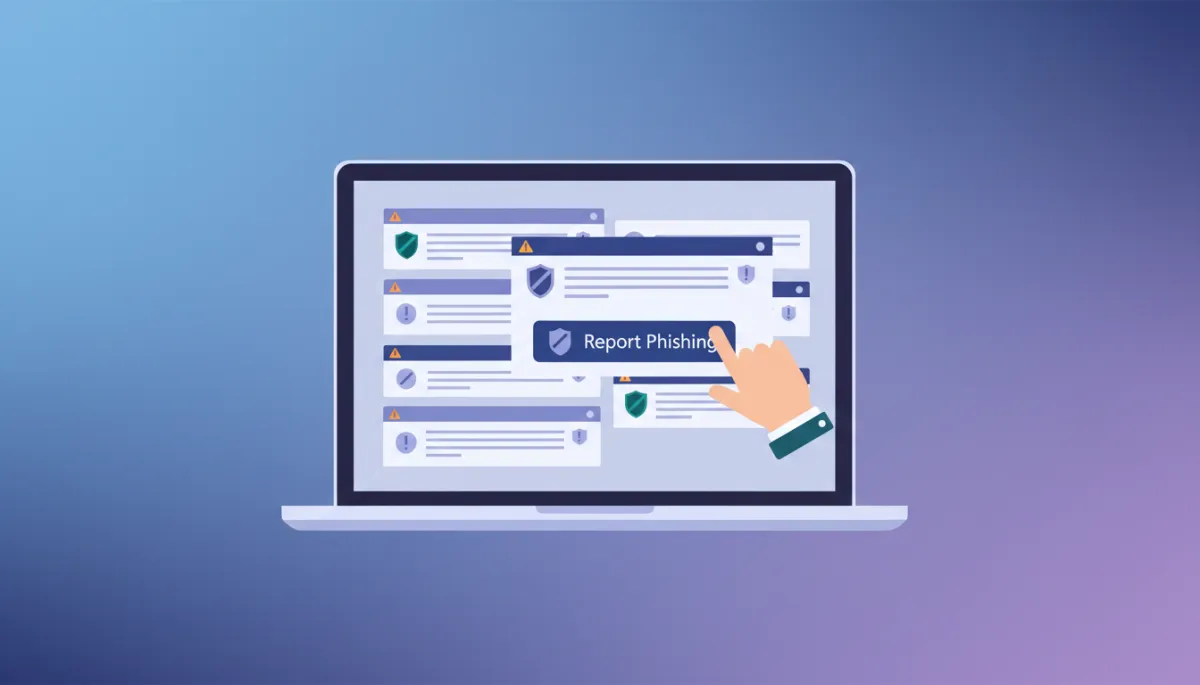
Small interface cues and simple report buttons dramatically increase early phishing detection.
🛡️ Is Your Organization Protected Against Phishing?
Most businesses don't find out they have a gap until after an incident. The Intelesys team can assess your current email security posture, identify your highest-risk vulnerabilities, and recommend the right defenses for your organization — at no cost.
Step 4: Run Regular Phishing Simulations with Clear Feedback
Training without testing is guesswork. To make phishing attack defense measurable, run simulated phishing campaigns on a recurring schedule. Monthly or quarterly is a good starting point for most organizations. Use a mix of simple and more sophisticated templates that mirror real threats: delivery notices, HR updates, invoice changes, and password alerts.
Track basic metrics: who opened, who clicked, who entered credentials, and who reported the email. Over time, these numbers should trend in the right direction: fewer clicks, more reports.
Provide instant feedback: when someone clicks a simulated phish, show a short explainer page. Highlight the clues they missed, in plain language, with screenshots of the email they just saw.
Avoid shame: the goal is learning, not blame. Make it clear that everyone is a target, and improvement is expected, not perfection.
Many risk assessment tools can ingest simulation results and update user risk scores. This creates a feedback loop between your employee training programs, your network security measures, and your overall cybersecurity best practices. High-risk users can automatically receive extra micro-trainings, while lower-risk groups might see fewer campaigns to avoid fatigue.
📌 Key Takeaway: Simulations should feel realistic but safe. The value lies in honest data and fast, constructive feedback, not in tricking employees for its own sake.
Step 5: Connect Phishing Defense to Data Breach Prevention Plans
Phishing incidents do not exist in isolation. They are often the starting point for credential theft, internal fraud, or ransomware. To make your practice robust, tie it directly into your broader data breach prevention and response planning. Define, in advance, what happens when a suspected phishing compromise occurs:
Immediate actions: reset credentials, revoke active sessions, and review recent login history for the affected account. If MFA alerts show unusual patterns, treat them as potential compromise signals, not noise.
Containment: check whether any suspicious rules, forwarding settings, or new devices have been added to the mailbox. Remove them and document the findings.
Impact review: identify whether sensitive data was exposed or exfiltrated. This step links phishing incidents directly to your legal and regulatory obligations.
By embedding phishing scenarios into incident response exercises, both IT and business leaders see how a simple click can evolve into a full data breach. This clarity often unlocks support for sustained investment in phishing attack defense, rather than one-off campaigns that fade when budgets tighten.
Governance: Make Phishing Defense Part of Cybersecurity Best Practices
To last, a practice needs ownership and rhythm. Assign clear responsibility for your phishing program: usually a joint effort between security, IT, and HR or training. Document a simple charter that explains why the program exists, how often simulations run, how results are used, and how privacy is protected. This keeps the practice aligned with broader cybersecurity best practices and with your organization’s culture.
Report regularly to leadership: share trends, not just single campaign results. Highlight reduction in click rates, increase in reporting, and correlation with fewer real incidents.
Align with policies: update your acceptable use and security policies to include expectations for email handling, reporting, and training participation, in clear language.
Review annually: as attackers change tactics, refresh templates, training content, and supporting risk assessment tools to stay relevant.
Minimalist Implementation Roadmap for Businesses and Agencies
You do not need a large security team to start. A small, deliberate roadmap can bring continuous phishing defense to life within a few months. Focus on four phases:
Foundation (Month 1): Choose a phishing simulation and training platform or a managed service. Map high-risk roles. Enable basic email protections and MFA if not already in place. Define a simple reporting channel for suspicious messages.
Pilot (Months 2–3): Run initial training for a subset of users in high-risk roles. Launch a pilot phishing simulation with clear communication. Collect metrics and feedback. Adjust content and difficulty based on what you learn.
Scale (Months 4–6): Expand training and simulations to the wider organization. Introduce role-specific modules. Integrate results with your risk assessment tools or dashboards. Begin regular reporting to leadership on progress and incidents avoided.
Optimize (Ongoing): Refresh templates with current lures. Tune network security measures to block recurring malicious domains and patterns. Use lessons from real incidents to refine employee training programs and keep content grounded in reality.
Bringing It All Together
Cybersecurity can feel overwhelming: countless tools, evolving threats, and limited budgets. Focusing on one granular, high-impact practice cuts through that noise. Continuous phishing defense is that practice. It sits at the intersection of cybersecurity best practices, human behavior, and technical control. It supports data breach prevention in a direct, measurable way and strengthens the entire security posture of businesses and agencies alike.
By mapping your human attack surface with risk assessment tools, designing lean employee training programs, reinforcing them with layered network security measures, and validating everything through regular simulations, you create a simple but powerful loop. Each cycle teaches your people, sharpens your defenses, and reduces the chance that the next email becomes tomorrow’s headline incident.
The path forward does not require perfection or complexity. It requires choosing one critical practice, executing it consistently, and improving it over time. For most organizations today, that practice should be continuous phishing defense. Start small, keep it simple, and let results guide the next step.
🔒 Ready to Build a Stronger Defense for Your Organization?
Phishing is the #1 entry point for cyberattacks — and most organizations don't have the right defenses in place. The Intelesys team specializes in managed cybersecurity for businesses and government agencies. Let's talk about what protecting your organization actually looks like.