





Choosing the Right Phone System for Business
Business Communication, VoIP Options, Phone Systems
How to Choose the Right Phone System for Modern Business Communication
Your phone system is no longer just a dial tone. It is the backbone of how your team connects with customers, partners, and each other. For businesses and agencies, choosing the right phone system now means weighing traditional lines against flexible, cloud-based VoIP systems that can scale, integrate, and adapt as you grow.
Why Your Phone System Decision Matters More Than Ever
The way customers reach you sets the tone for every relationship. A dropped call, a confusing menu, or a voicemail black hole can quietly erode trust. On the other hand, a clear, reliable phone system that routes calls to the right person, supports remote work, and gives you insight into call activity becomes a competitive advantage in everyday business communication.
For many organizations, especially service-based companies and agencies, the phone is still where deals are closed, issues are resolved, and long-term accounts are retained. This is why the decision to choose phone system technology should be intentional, not just based on what you have always used or what seems cheapest at first glance. The best phone systems do more than ring; they support the way you work today and tomorrow.
Understanding Your VoIP Options vs. Traditional Phone Lines
When you look at the landscape of business phone solutions, you will see three broad categories: legacy landlines, on-premise PBX systems, and cloud-based VoIP systems. Each has a place in history, but only one aligns naturally with how modern teams work across offices, homes, and time zones. That is why so many organizations are moving their phone system to VoIP, often as part of a wider cloud strategy.
Legacy landlines: Simple, familiar, but limited. Scaling means installing new lines, and advanced features are often add-ons or unavailable.
On-premise PBX: More control, but comes with hardware, maintenance, and higher upfront cost. Upgrades can be slow and expensive.
Cloud VoIP systems: Calls travel over the internet, features are delivered as software, and you can add users, numbers, and locations without rewiring your office.
Among all VoIP options, cloud solutions stand out because they remove the physical constraints of a traditional phone system. Your team can take business calls from desktops, laptops, or mobile phones, while you manage everything from a single web dashboard. For agencies that juggle multiple clients, brands, and campaigns, this flexibility is not a luxury; it is a necessity.
💡 Pro Tip: When comparing VoIP options, always factor in the cost of change—training, setup, and migration—not just the monthly price per user.
Core Questions to Ask Before You Choose a Phone System
A minimalist approach to technology decisions starts with clear questions. Before you look at feature lists or pricing tables, step back and define what your organization truly needs from a phone system. This clarity will keep you from overbuying, underbuying, or getting locked into the wrong platform for years.
How do your customers prefer to reach you? Phone, email, chat, social, or a mix? If phone is central, invest accordingly.
Where does your team work? Single office, multiple locations, or remote-first? VoIP systems are especially strong for distributed teams.
What tools do you already use? CRM, help desk, project management, marketing platforms. The best phone systems integrate with the tools you rely on every day.
How fast are you growing? If you expect to add people, brands, or locations, you need a system that scales without a major overhaul.
What level of insight do you need? Call logs, recordings, and analytics support better coaching and decision-making, especially in sales and support teams.
When you choose phone system technology through this lens, VoIP systems naturally rise to the top. They meet the needs of modern business communication without adding unnecessary complexity. You get a clean, software-driven experience instead of a tangle of cables and legacy hardware.
Why VoIP Systems Are a Natural Fit for Businesses and Agencies
For most businesses, and especially for agencies, the case for VoIP is strong. The work is fast, collaborative, and often distributed. Teams jump between client calls, internal standups, and vendor conversations. A rigid, location-bound phone system gets in the way. In contrast, cloud-based VoIP systems follow your team wherever they go, with one consistent identity for your brand and your clients.
Flexibility for hybrid work: Staff can answer calls from the office, home, or on the road using the same business number and call routing rules.
Unified presence: Direct lines, shared numbers, and departmental queues all live inside one platform, so you avoid fragmented communication.
Lower total cost of ownership: Less hardware, fewer maintenance contracts, and predictable subscription pricing make budgeting simpler.
When we talk about VoIP for agencies, the benefits go even further. Agencies often need to manage multiple brands or campaigns. With the right VoIP platform, you can assign dedicated numbers per client, track call volume and performance, and even share call recordings for training and quality control. This turns your phone system into a quiet but powerful part of your client service offering.
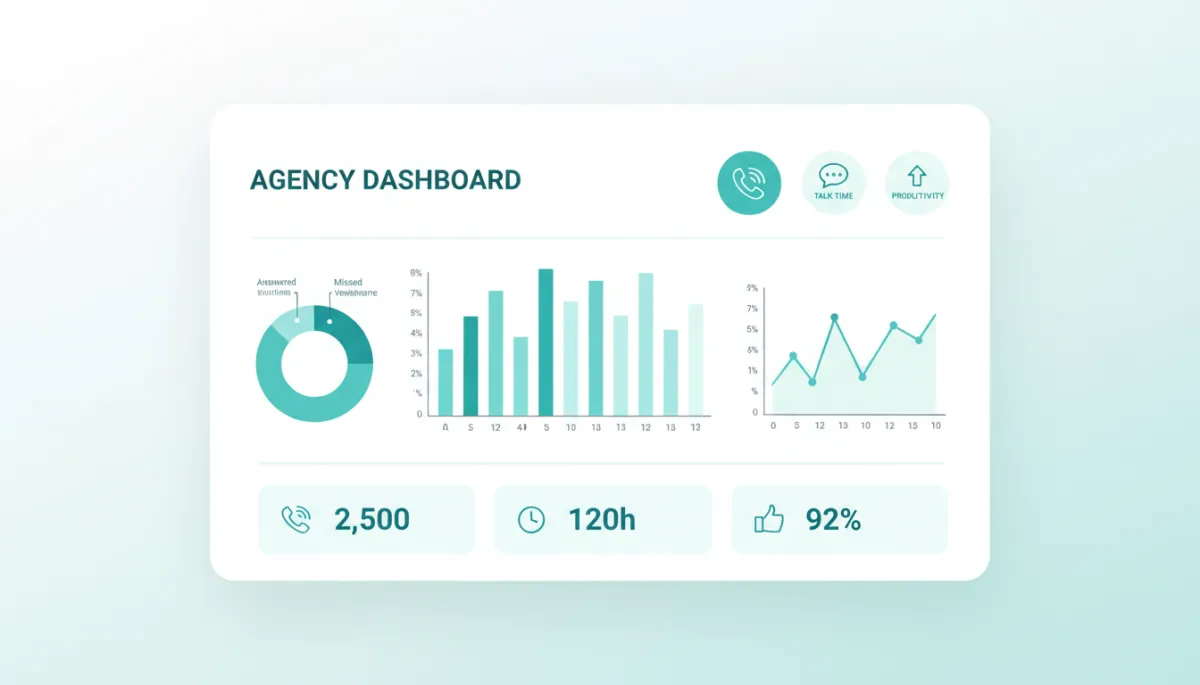
Clear VoIP analytics help agencies refine client communication and team performance.
"Thinking about switching to VoIP? Talk to our team and get a free consultation tailored to your setup." → Book a Free Call
Key Features to Look For in the Best Phone Systems
Once you are convinced that VoIP belongs on your shortlist, the next step is to compare providers and platforms. The best phone systems share a few core characteristics. Think of these as your non-negotiables when evaluating VoIP options for your business or agency.
1. Call Quality and Reliability
A phone call is only as good as the voice on the other end. Look for providers with strong uptime guarantees, redundant infrastructure, and clear voice quality. Ask about quality-of-service options and how they handle network issues. A minimalist rule here is simple: if the call does not sound good, nothing else matters. Your business communication depends on clarity and consistency.
2. Easy Management and Setup
The right VoIP system should not require a full-time phone administrator. You should be able to add users, assign numbers, create call flows, and update greetings from a clean, web-based dashboard. For agencies, this is even more important, because client needs can change quickly. A simple interface keeps your operations lean and responsive.
3. Smart Call Routing and IVR
Customers should never feel lost in your phone system. Look for flexible call routing rules, ring groups, and IVR (interactive voice response) menus that are easy to design and adjust. This ensures calls reach the right person or team quickly, whether that is sales, support, or a specific account manager. For agencies, you can create dedicated flows per client or campaign, keeping every interaction organized and on-brand.
4. Integrations with Your Existing Tools
Your phone system should not live in isolation. The best phone systems integrate with your CRM, help desk, collaboration, and marketing tools. This allows you to click-to-call from contact records, log calls automatically, and see caller details before you answer. For VoIP for agencies, integrations with project management and client reporting tools can streamline workflows and enhance transparency with clients.
5. Analytics, Reporting, and Recording
You cannot improve what you cannot see. Look for VoIP systems that offer straightforward analytics: call volume, duration, missed calls, and response times. Call recording is also valuable for training, quality assurance, and compliance. Agencies can use these insights to coach account teams, refine scripts, and demonstrate responsiveness to clients in a concrete way.
6. Security and Compliance
Business calls often involve sensitive information. Your provider should offer encryption, secure user authentication, and compliance support for your industry where relevant. Minimalism here means strong, built-in protections without complicated add-ons or separate systems to manage. Ask direct questions about how data is handled, stored, and protected across the entire phone system.
A Simple Framework to Choose Phone System for Your Organization
With so many VoIP options on the market, it is easy to get lost in feature comparisons. A minimalist framework can help you focus. Think in terms of three layers: essentials, differentiators, and future needs. This keeps your evaluation grounded and aligned with how your team actually works.
Essentials: What You Need on Day One
Reliable calling with clear audio for local and international calls.
Core features: voicemail, call forwarding, caller ID, call transfer, and conferencing.
Easy onboarding for new users, with minimal training required.
Any system you consider should handle these basics without friction. If a platform struggles here, it is not the right fit, no matter how attractive the advanced features may seem.
Differentiators: What Gives You an Edge
Deep integrations with your CRM or ticketing system, so calls are logged automatically.
Advanced routing logic for sales, support, and account management teams.
Branded caller ID, local or toll-free numbers in key markets, and SMS support.
For agencies, differentiators often include multi-client management capabilities, detailed reporting per client, and easy ways to share insights with stakeholders. These are the features that turn a standard phone system into a strategic asset for your organization.
Future Needs: What Will Matter in 12–24 Months
Planned hiring or expansion into new regions that will require more numbers or languages.
Potential shifts in work style, such as moving to a hybrid or fully remote model.
The desire to add channels like chat, SMS, or video, and manage them alongside voice.
When you choose phone system capabilities with these future needs in mind, you avoid costly migrations and disruptions later. A scalable VoIP platform lets you start simple and add features as you grow, without forcing a complete rebuild of your communication infrastructure.
Common Mistakes When Choosing a Phone System (and How VoIP Helps You Avoid Them)
Many organizations approach phone systems with good intentions but end up with solutions that are either too complex, too limited, or too expensive. Recognizing common pitfalls can help you make a cleaner, more confident decision—and this is where modern VoIP systems often shine.
Overbuying features: It is easy to get sold on advanced capabilities you will never use. A minimalist mindset focuses on what delivers real value for your team and your clients.
Underestimating growth: Picking a system that works for 10 people today but struggles at 25 or 50 creates friction later. VoIP is built to scale in small, predictable steps.
Ignoring integration: A phone system that does not connect to your core tools creates manual work and data gaps. Modern VoIP platforms typically offer a stronger integration ecosystem than legacy systems.
Focusing only on price: While cost matters, the cheapest option may limit your ability to serve customers well. VoIP delivers strong value by combining lower infrastructure costs with richer features.
By choosing a well-designed VoIP platform, you sidestep many of these issues. You get a clean, software-first approach to business communication that can evolve with your organization, rather than a fixed asset that quickly feels outdated.
How Our VoIP Systems Support Businesses and Agencies
As a provider focused on modern VoIP systems, we design our solutions around the realities of today’s teams. Our goal is simple: deliver a clear, reliable phone system that stays out of your way while quietly powering your most important conversations. For businesses and agencies, that means a platform that feels light, intuitive, and dependable from day one.
Fast onboarding so your team can start making and receiving calls in hours, not weeks.
Flexible numbering options, including local, toll-free, and international numbers as you expand.
Clean, web-based administration with role-based access for managers and admins.
For agencies, our approach to VoIP for agencies is built around multi-client management. You can assign dedicated numbers per client, segment call flows, and review analytics at both the agency and client level. This helps you keep your internal operations streamlined while giving each client a tailored communication experience that reflects their brand and priorities.
📌 Key Takeaway: The right VoIP system should simplify your communication stack, not add another layer of complexity. Look for clear interfaces, thoughtful defaults, and support that understands how agencies and growing businesses operate.
A Minimalist Checklist for Your Next Phone System
To bring everything together, here is a concise checklist you can use as you evaluate VoIP options and phone system vendors. Share it with stakeholders across your business or agency so everyone is aligned on what matters most.
Does the system support your current team size and your expected growth?
Can your team work from anywhere without losing call quality or control?
Are core features—routing, voicemail, conferencing—simple to configure and use?
Does it integrate with your CRM, help desk, and collaboration tools?
Can you access clear analytics and call history without exporting complex reports?
Is pricing transparent, predictable, and aligned with the value you receive?
If a solution checks these boxes, you are likely looking at one of the best phone systems for your needs. From there, it becomes a matter of fit: how well the interface matches your workflows, how responsive the support team is, and how confident you feel entrusting your daily business communication to that platform.
Moving Forward: Choosing VoIP with Confidence
Choosing the right phone system does not have to be complicated. When you strip away jargon and legacy assumptions, the path becomes clear. Modern VoIP systems offer the flexibility, scalability, and clarity that today’s businesses and agencies need. They align with how teams actually work—across locations, devices, and time zones—while keeping management simple and predictable.
Start by clarifying your needs. Focus on core features and integrations. Evaluate providers through the lens of reliability, simplicity, and support. Then choose phone system technology that will not just work today, but will continue to support your growth over the next several years. For many organizations, that decision naturally leads to VoIP—and to a cleaner, more modern foundation for every call your team makes.
If you are ready to explore a VoIP platform designed specifically for businesses and agencies, our team can guide you through your options, map them to your current setup, and help you design a phone system that feels as modern and focused as the work you do every day. In a world full of noise, a clear call can still be your strongest signal.
"Ready to explore a VoIP system built for your business? Intelesys can walk you through your options, map them to your current setup, and get you up and running fast." → Talk to Intelesys Today